Exploring the Role of Thermocouples in Accurate Temperature Measurement
Understanding Thermocouples and Their Importance in Temperature Measurement
What is a Thermocouple?
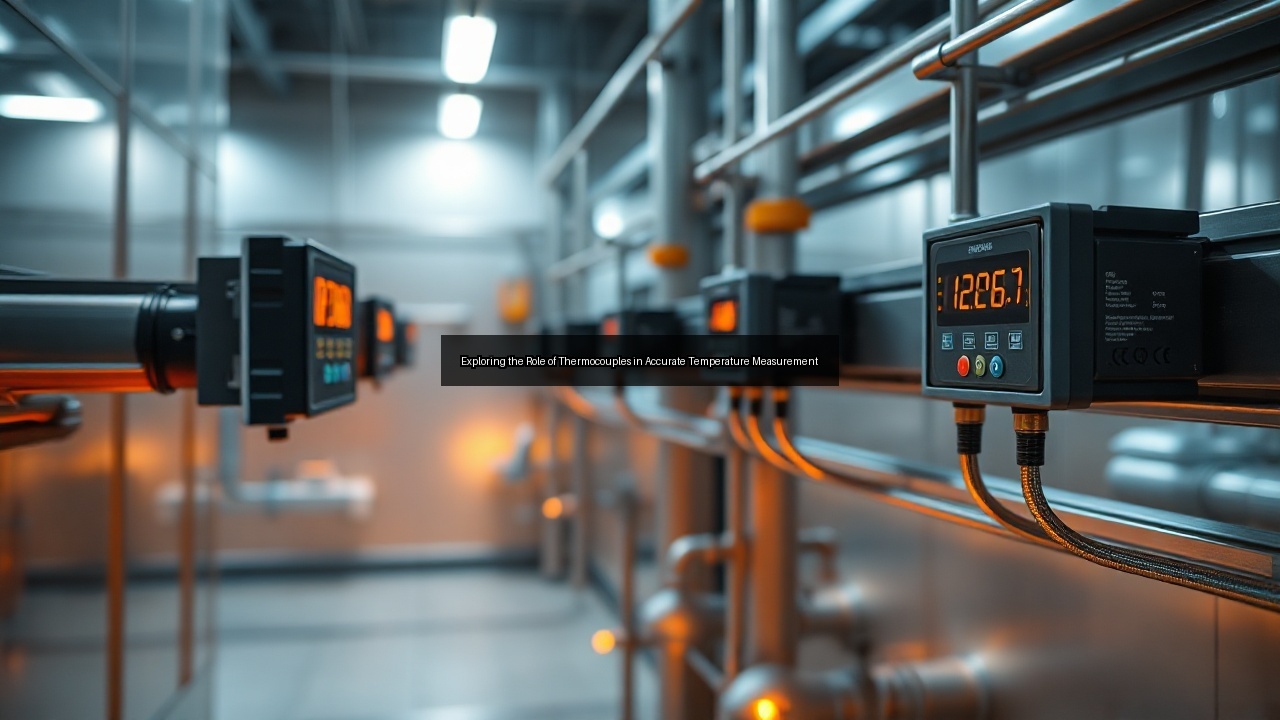
Engineers depend on thermocouples as rugged sensors that convert temperature differences into voltage signals for reliable temperature measurement across industrial settings. These devices consist of two dissimilar metal wires joined at one end, creating a junction that responds quickly to heat changes. Process temperature controller units often pair with thermocouples to maintain set values in heaters and ovens. Their simplicity and wide operating range make them essential for applications where accuracy matters, such as chemical processing and food production. Unlike fragile alternatives, thermocouples withstand vibration and corrosion while delivering consistent readings that support automation goals. In practice, the hot junction is exposed directly to the process medium, while the cold junction remains at a known reference temperature, allowing precise differential measurements even in harsh environments like furnaces operating above 1000°C or pipelines carrying corrosive fluids.
Thermocouples also excel in high-vibration scenarios, such as engine testing or heavy machinery monitoring, where other sensors might fail mechanically. Their low cost and ability to measure over wide ranges—from cryogenic levels to over 2300°C in specialized noble-metal versions—make them indispensable. When integrated into closed-loop systems, they provide the raw data that enables process temperature controller units to execute rapid adjustments, reducing downtime and improving energy efficiency in continuous production lines.
Types of Thermocouples and Their Applications
Common thermocouple types include Type K for general-purpose use up to 1260°C and Type J for lower-temperature environments in vacuum furnaces. Type T excels in cryogenic conditions, while Type N offers improved stability in oxidizing atmospheres. Industries select these sensors based on material compatibility and required precision. Panel-mount controllers integrate specific thermocouple inputs to regulate process temperature controller functions in manufacturing lines. DIN-rail controls accommodate multiple types for flexible installation in control cabinets. Surface-mount control options allow quick deployment in compact machinery where space limits traditional setups. For example, Type K (chromel-alumel) is favored in aerospace engine monitoring due to its broad range and oxidation resistance, whereas Type J (iron-constantan) suits older equipment retrofits in plastics extrusion where temperatures rarely exceed 750°C.
Specialized variants like Type R and S, using platinum-rhodium alloys, deliver laboratory-grade accuracy in semiconductor wafer processing or glass manufacturing. Selection criteria also consider wire diameter, sheath material (such as stainless steel or Inconel), and response time, which can be as fast as milliseconds in fine-gauge designs. Matching the thermocouple type to the controller’s input configuration ensures optimal performance and longevity in demanding applications like heat treatment of metals or pharmaceutical sterilization cycles.
The Working Principle of Thermocouples
Thermocouples operate on the Seebeck effect, where temperature gradients between the hot junction and reference point generate a measurable voltage proportional to the temperature difference. This direct conversion enables fast response times critical for dynamic temperature control. Technicians calibrate these sensors regularly to preserve accuracy in demanding conditions. When connected to PID controllers, the voltage signal feeds real-time data that adjusts heater output. Process temperature controller designs incorporate cold-junction compensation to eliminate errors from ambient fluctuations, ensuring stable performance across varying environments. The generated emf follows the equation E = αΔT, where α is the Seebeck coefficient specific to the metal pair, allowing predictable scaling into temperature values.
Additional thermoelectric effects, including the Peltier and Thomson effects, can influence readings in complex setups, but modern compensation circuits mitigate these. In high-electromagnetic-interference zones, shielded extension wires and proper grounding prevent noise from corrupting the millivolt-level signals. This principle underpins reliable operation in everything from food pasteurization tunnels to nuclear reactor coolant monitoring, where even small temperature deviations can have significant consequences.
The Role of PID Control in Temperature Regulation
Introduction to PID Controllers
PID controllers combine proportional, integral, and derivative actions to minimize deviation between measured temperature and desired setpoints. These devices calculate corrective outputs that stabilize processes faster than basic on-off thermostats. Industrial temperature controls rely on PID algorithms to handle load changes without overshoot. PC-programmable controllers allow users to tune parameters for specific heater control equipment. Integration with thermocouples provides the feedback loop necessary for precise regulation in extrusion lines and batch reactors. Proportional action responds immediately to error magnitude, while integral action eliminates accumulated offset over time and derivative action dampens rapid changes to prevent oscillations.
How PID Control Enhances Temperature Accuracy
PID control reduces steady-state error through integral action while derivative terms anticipate rapid temperature shifts. This combination delivers tighter regulation than simple thermostat methods, improving product quality in sensitive operations. Process temperature controller options often include auto-tuning features that optimize PID values automatically. Engineers achieve higher accuracy by matching controller response to the thermal mass of the system. Such precision supports consistent output in applications ranging from plastic molding to pharmaceutical drying. Auto-tuning typically applies a step change or relay oscillation method to identify process gain, dead time, and time constants, then calculates optimal Kp, Ki, and Kd values without manual intervention.
In high-inertia systems like large ovens, aggressive derivative settings prevent overshoot that could damage materials, while low-thermal-mass processes benefit from higher proportional gains for quick recovery. The result is reduced scrap rates and energy savings, as heaters operate closer to the exact power required rather than cycling inefficiently.
Integration of Thermocouples with PID Controllers
Thermocouples supply continuous analog signals to PID controllers, which then modulate power to heating elements for exact temperature maintenance. Modern systems route these inputs through configurable channels that accept multiple sensor types. DIN-rail controls simplify wiring in automated panels where space constraints demand compact solutions. The seamless link between sensor and controller enables rapid corrections that maintain process stability even under fluctuating loads. Signal conditioning includes linearization tables stored in the controller’s firmware, converting the nonlinear thermocouple voltage into accurate temperature readings across the full operating span.
Process Temperature Controllers: Options and Features
Panel-Mount vs. DIN-Rail Controls
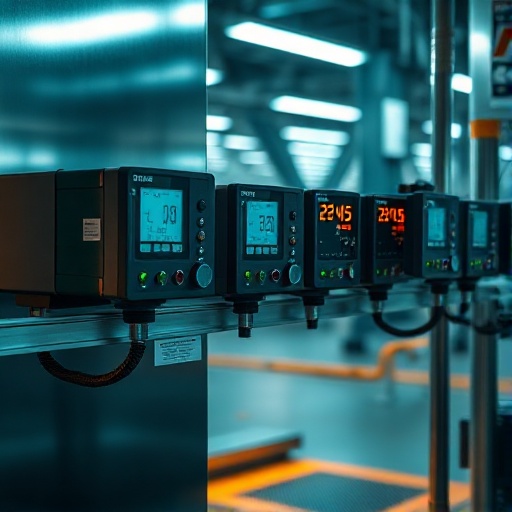
Panel-mount controllers fit flush into equipment enclosures for direct operator access and clear displays. DIN-rail controls mount inside cabinets to conserve front-panel space while supporting high-density wiring. Both styles handle thermocouple inputs and deliver outputs to heaters or valves. Process temperature controller selections depend on installation environment, with panel-mount units preferred for visibility and DIN-rail versions favored in modular automation setups. 1/16 DIN and 1/32 DIN formats offer standardized sizing that simplifies retrofits across different machines. Panel-mount units often feature larger, brighter displays for operators on the factory floor, while DIN-rail models prioritize I/O density and communication ports for PLC integration.
Configurable Inputs and Outputs in Controllers
Controllers with configurable inputs and outputs accept thermocouples, RTDs, or voltage signals while providing relay, analog, or SSR drive outputs. This flexibility lets users adapt a single device to multiple process temperature controller tasks without hardware changes. Engineers program alarm thresholds and ramp-soak profiles to match specific temperature control requirements. Such versatility reduces inventory needs and speeds commissioning in facilities running varied equipment. Ramp-soak functionality allows precise temperature profiles, such as gradual heating to avoid thermal shock in ceramic firing or multi-stage curing cycles in composites manufacturing.
Surface-Mount Control Options for Various Applications
Surface-mount control options place compact units directly on machinery frames for localized temperature regulation. These designs suit portable heaters and small ovens where remote mounting proves impractical. Built-in displays and keypads allow quick setpoint adjustments without opening enclosures. Process temperature controller models in this category often include RS-485 ports for later expansion into larger automation networks. Their rugged enclosures protect against dust, moisture, and mechanical impact common in mobile or field-deployed equipment.
Enhancing Measurement Precision with Modern Technologies
Infrared Temperature Measurement Techniques
Infrared sensors enable non-contact temperature measurement of moving or hazardous surfaces where thermocouples cannot attach. These devices detect emitted radiation and convert it into temperature values with millisecond response. Process temperature controller systems combine infrared inputs with contact sensors for hybrid monitoring in coating lines and metal processing. Calibration against known standards maintains accuracy across emissivity variations common in industrial materials. Emissivity settings can be adjusted dynamically based on surface finish, oxidation level, or material composition to ensure readings remain reliable on shiny metals or coated surfaces.
Calibration Methods for Thermocouples
Regular calibration compares thermocouple output against reference standards in controlled baths or furnaces to verify accuracy. Ice-point references and fixed-point cells establish traceable baselines that correct drift over time. Technicians document results to meet quality standards in regulated industries. Integrated calibration routines in advanced PID controllers streamline verification without process interruption. NIST-traceable procedures often involve comparison at multiple points across the operating range, with polynomial coefficients applied to compensate for any deviation.
Advancements in Temperature Control Systems
Recent temperature control systems incorporate self-tuning algorithms and digital filtering that reject noise from thermocouple signals. These improvements yield tighter control bands and reduced energy consumption in heater applications. PC-programmable controllers now feature touchscreen interfaces and remote diagnostics that accelerate troubleshooting. Such progress supports higher throughput in automated production environments. Advanced models also include predictive maintenance alerts based on sensor drift trends and heater cycle counts.
Automation and Its Impact on Industrial Temperature Controls
The Role of RS-485 and Modbus in Automation
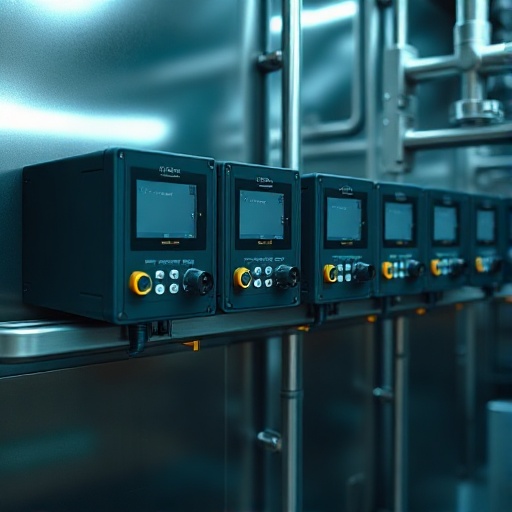
RS-485 networks transmit data over long distances with noise immunity essential for factory floors. Modbus protocol standardizes communication between process temperature controller units and supervisory systems. Engineers poll multiple controllers for temperature, humidity, and pressure values through a single bus. This connectivity enables centralized monitoring and recipe management that improves overall process consistency. Modbus RTU or TCP variants allow seamless integration with SCADA or DCS platforms, supporting data logging for regulatory compliance and quality audits.
Controlling Humidity and Pressure Alongside Temperature
Integrated controllers regulate humidity and pressure in addition to temperature for applications like environmental chambers and drying ovens. Sensors feed data into PID loops that coordinate multiple variables simultaneously. Process temperature controller platforms with multi-loop capability reduce hardware count while maintaining tight tolerances across all parameters. Such coordinated control prevents quality issues caused by unbalanced conditions, for instance ensuring proper moisture removal without warping in lumber drying or tablet coating processes.
Choosing the Right Process Temperature Controller for Your Needs
Selection begins with matching input types, output power ratings, and mounting style to the application. Consider 1/32 DIN units for space-limited panels or full-size panel-mount models for complex recipes. Evaluate communication options like Modbus over RS-485 for future automation expansion. Devices for regulating process temperature must also support required accuracy levels and environmental ratings. Careful review of PID controller options ensures reliable performance and minimal downtime in demanding operations. Additional factors include power supply requirements, agency approvals (UL, CE), and availability of backup or redundant control modes for critical processes.